California Steakhouses | SteakMap
The Best Steakhouses in California
California holds 255 steakhouses across 130 cities — the largest collection in this directory by a wide margin, and the only state with a Michelin-starred steakhouse, a butcher shop licensed to sell certified Kobe, and a beef cut it invented itself.
It is also too big to treat as one place. The Bay Area, Los Angeles, San Diego, wine country and the Central Valley are five different steak cultures that happen to share a state line. This page ranks the best of them, then breaks the state apart.
The SteakMap Ten: California's best, ranked
- Niku Steakhouse — San Francisco. The most serious beef operation in the state and a Michelin-starred one. Niku runs an in-house dry-aging program out of its own butchery next door, cooks over a custom binchotan charcoal and wood-fired grill, and is led by chef Dustin Falcon, formerly of Lazy Bear and The French Laundry. The Butcher Shop by Niku is San Francisco's only certified Kobe retailer and the exclusive US purveyor of A5 wagyu from Ono Farm in Japan. Opened 2019, in the Design District.
- Alexander's Steakhouse — San Francisco, Cupertino and Pasadena. Greater Omaha Prime dry-aged 28 days, alongside what is credibly one of the widest selections of Japanese beef in the country — A5 from Kagoshima, Miyazaki and Gunma, sourced from small farms across the US, Australia and Japan. If you want to taste Japanese prefectures against each other, this is where.
- Larsen's — Valencia, Woodland Hills, Encino, Simi Valley and Oxnard. Ages its beef twice — dry first, then wet-aged a further fourteen days — and keeps a skilled butcher on site at all times watching airflow, temperature and humidity. Founder Flemming Larsen started as a meat cutter in 1984, and it shows: this is a steakhouse built by a butcher rather than a restaurateur.
- CUT — Beverly Hills. Wolfgang Puck's steakhouse, and the room that pulled Los Angeles steak out of the 1970s. Japanese, Australian and American beef on one board.
- Born and Raised — San Diego. Little Italy's showpiece, and one of the few California kitchens carrying wet-aged beef deliberately rather than by default. Tableside service done properly.
- Arroyo Chop House — Pasadena. The San Gabriel Valley's standard, and another of the state's wet-aged rooms.
- 555 East American Steakhouse — Long Beach. A dry-aging kitchen in a city better known for its port than its beef.
- Osso Steakhouse — San Francisco. Nob Hill, and the most classically San Franciscan room on this list.
- Rare Society — Santa Barbara. The closest thing on this list to the Central Coast's own tradition, in the county where Santa Maria barbecue was born.
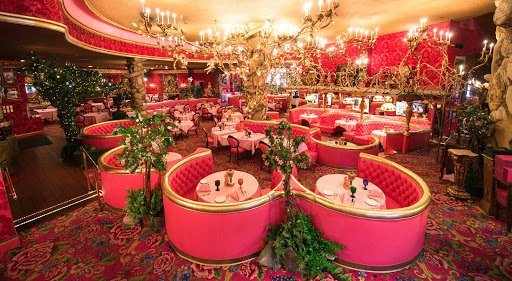
- Alex Madonna's Gold Rush Steak House — San Luis Obispo. Inside the Madonna Inn, which is its own reason to go. Central Coast beef in a room nobody forgets.
California invented a cut
No other state on SteakMap can say this. The tri-tip is Californian, and it comes from a specific place: the Santa Maria Valley, in Santa Barbara County on the Central Coast.
Santa Maria-style barbecue goes back to the mid-19th century, when large chunks of top sirloin were seasoned with nothing more than garlic, salt and pepper and cooked slowly over red oak coals. Red oak is the detail that makes it regional — it grows there, it burns hot and clean, and the flavor does not transfer to another wood.
The cut itself arrived later. Tri-tip — the triangular muscle off the bottom sirloin — is generally credited to Bob Schutz, a one-armed butcher in Santa Maria, in 1953. Before him it went into ground beef. He put it on the rotisserie instead, and within a decade it had displaced top sirloin as the meat of choice.
It is now regarded as a mainstay of California's culinary heritage, and it is still cooked over red oak on the Central Coast in a way it is nowhere else. If you are driving Highway 101 between Los Angeles and the Bay, this is the stretch to stop and eat beef.
California is really five steak states
With 255 listings in 130 cities, “best steakhouse in California” is not a single question. It breaks down like this:
- The Bay Area — the most technically serious beef in the state. San Francisco alone has 14 listings, including Niku, Alexander's and Osso.
- Los Angeles and the Westside — Los Angeles, Beverly Hills, Santa Monica and Pasadena. Bigger rooms, bigger names, and the state's deepest concentration of wagyu.
- San Diego — 19 listings, the largest single-city count in California.
- Wine country — Napa and Sonoma, where the steakhouse exists to serve the cellar.
- The Central Coast and Valley — San Luis Obispo, Santa Barbara, Fresno. Where the tri-tip lives.
How California ages its beef
- Dry, then wet for a further 14 days — Larsen's, across five rooms. One of only two sequential two-stage aging programs SteakMap has found anywhere.
- 28 days — Alexander's, on Greater Omaha Prime.
- In-house, day count unpublished — Niku, aged in its own adjacent butchery.
Browse every dry-aged steakhouse in California → · Browse wagyu in California → · Browse wet-aged in California →
The best Japanese beef in America is in California
If your reason for eating steak is Japanese wagyu specifically, California is the strongest state in the country for it. Niku's butcher shop is the only certified Kobe retailer in San Francisco and the exclusive American outlet for one Japanese farm's A5. Alexander's carries A5 from multiple prefectures at once, which lets you compare Kagoshima against Miyazaki against Gunma in a single sitting.
That is a level of access that simply does not exist in most of the country, and it is a function of California's Pacific trade and its Japanese American communities rather than of its cattle.
Sorry, no records were found. Please adjust your search criteria and try again.
Sorry, unable to load the Maps API.