Oklahoma Steakhouses | SteakMap
The Best Steakhouses in Oklahoma
Oklahoma has 28 steakhouses across 14 towns in this directory — Oklahoma City holds 11, Tulsa 5, and the remaining twelve are one apiece in places like Pawnee, Leedey, Poteau and Tahlequah.
Here is the number that matters: the entire state contains two national chain steakhouses, and both are in Tulsa. Oklahoma City — the largest city, with eleven steakhouses — has none at all. There is no other state in this directory where the biggest city is this completely independent.
The Oklahoma Ten
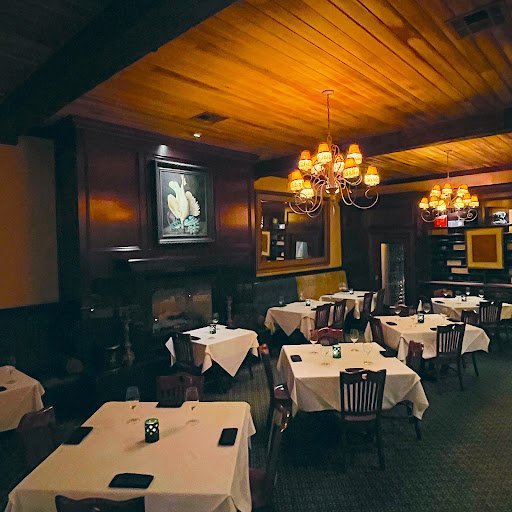
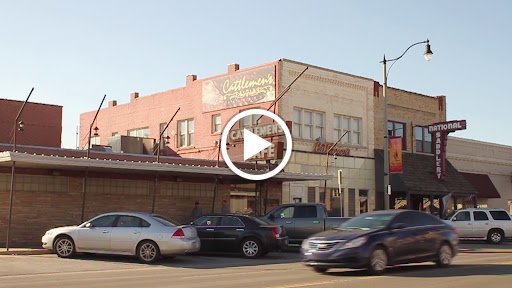
- Cattlemen’s Steakhouse (Stockyards City) — Oklahoma City’s oldest continuously operating restaurant, open since 1910, and the subject of the best ownership story in American steakhouse history. It is below. Order the steak, but the chicken-fried steak is the state religion.
- Jamil’s Steakhouse (Oklahoma City) — a Lebanese steakhouse, which is a real and specifically Oklahoman category. Dinner starts with tabouli, hummus and warm pita, then becomes a steak. Also below, because it deserves the space.
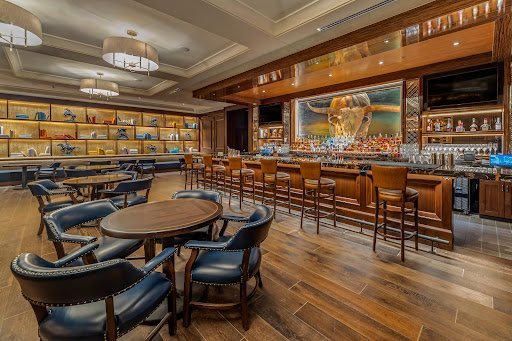
- Mahogany Prime Steakhouse (Tulsa) — the Oklahoma-grown prime steakhouse and the state’s most polished room.
- Red PrimeSteak (Automobile Alley) — modern Prime beef in a restored early-century building, and the best-looking dining room in the city.
- Boulevard Steakhouse (Edmond) — the north-side standard, and the one locals book for anniversaries.
- PRHYME Downtown Steakhouse (Tulsa) — small, serious and dry-aging focused, in the Deco District.
- Ranch Steakhouse (Oklahoma City) — Prime beef with a working-ranch framing, with a second room in Norman.
- Mickey Mantle’s Steakhouse (Bricktown) — named for the Commerce, Oklahoma farm boy who became the most famous Yankee of his era, and sited across from the ballpark, which is the correct place for it.
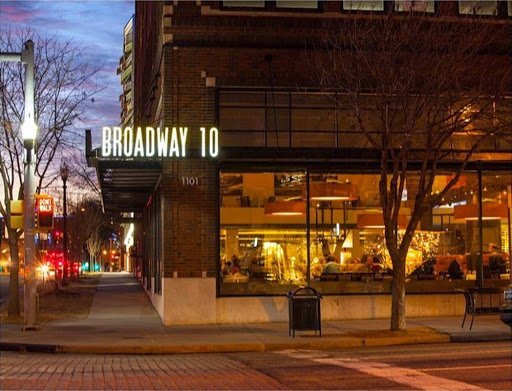
- Broadway 10 Bar & Chophouse (Oklahoma City) — the younger, louder chophouse, and proof the city is still opening them.
- Click’s Steakhouse (Pawnee) — a small-town Oklahoma steakhouse of the kind people drive an hour each way for, which is most of the point of this directory.
The last stockyard in America is still selling cattle every Monday
This directory tells the stockyard story in three states. Boston held the first colonial meat auction in 1742 and closed its abattoir in 1957. Chicago industrialized the business in 1865 and shut the Union Stock Yards in 1971. Oklahoma City is the part that never stopped.
The Oklahoma National Stockyards opened in 1910 and is the last terminal market left in the United States. It is still the world’s largest stocker and feeder cattle market, and it still runs on the old schedule: calves and yearlings on Monday, cows and bulls and pairs on Tuesday, roughly 7,000 to 8,000 head a week and something like 350,000 a year. Volumes are a fraction of what they were when a million head moved through annually, but the pens are full on a Monday morning and the auctioneer is working.
Cattlemen’s Steakhouse opened the same year, directly across from the yards, to feed the men working them. It is still there, and it is still the reason to drive to Stockyards City.
It was won on a roll of the dice
In 1945, a veteran named Gene Wade was gambling with Cattlemen’s owner Hank Frey. Frey was losing badly. Trying to recover everything at once, he offered the restaurant itself as the pot — if Wade could roll a hard six, two threes, against his entire life savings.
Wade rolled the hard six.
He kept the place for about forty-five years, buying up neighboring buildings as they came free and turning a stockyards diner into an institution. The number 33 is branded around the restaurant to this day — on the walls, in the fittings — commemorating the two threes that changed who owned it. It is the only steakhouse in this directory whose deed was settled on a dice table, and you can still eat in the room where it happened.
Oklahoma invented the Lebanese steakhouse
There were Lebanese immigrants in Oklahoma before there was an Oklahoma. Around 100 were working the oil fields near Tulsa by 1900, and as merchant work opened up in the new towns that number reached about 700 by 1920. They sold dry goods, they opened cafes, and eventually they did something nobody else in America was doing: they put Lebanese food on a steakhouse menu and did not treat it as a novelty.
Jamil’s is what survives of it. Jamil “Jim” Elias started the original in Tulsa in 1946, after a few years running a night club, during a post-war oil bust. The Elias brothers built a menu that should not work and does: steak and smoked bologna and catfish and barbecued ribs on one side, tabouli, hummus, dolmas, cabbage rolls and warm pita on the other. The Oklahoma City room opened in 1964 and has been there ever since, a short drive from the State Capitol and full of the people who work in it.
Dinner arrives in the old order. Butter and crackers on the table, then hummus and tabouli and pita, then a relish tray of pickles and crudites served over ice, then the steak. It is the last of Oklahoma City’s historic Lebanese steakhouses, and there is nothing else quite like it anywhere else in this directory.
Around the state
Oklahoma City also has Opus Prime, Stock & Bond, Symmetry, Culprits and Bob’s Steak & Chop House at the Omni. Tulsa adds Jimmy’s Chophouse.
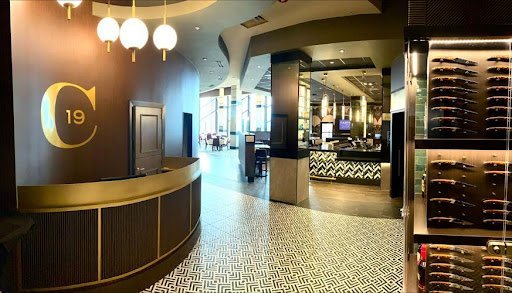
Out in the state, the list is one good room per town and worth the drive: Freddie Paul’s in Stillwater, Tumble Weeds in Bartlesville, Rustic Chophouse in Broken Arrow, Watson’s Chophouse in Muskogee, White Wolf in Tahlequah, Warehouse Willy’s in Poteau, Carvers on 19 in Catoosa, White Dog Hill outside Clinton, and Dry Creek Steakhouse and Lodge way out in Leedey, population under 400.
The national chains
Both of them: Ruth’s Chris and Fleming’s, in Tulsa. That is the whole list.
Browse the state by city: Oklahoma City and Tulsa.
Sorry, no records were found. Please adjust your search criteria and try again.
Sorry, unable to load the Maps API.